


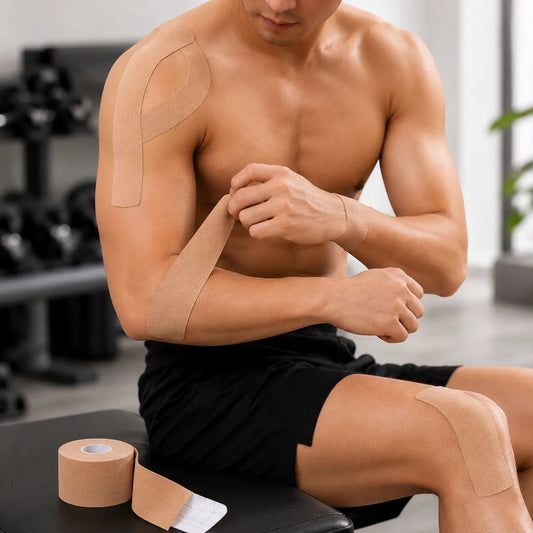


What is the difference between tape and bandages?
Although they are often used together, they serve different functions:
Tape:
- Secures dressings or provides support to muscles and joints
- Used for injuries, taping, or rehabilitation
- Available as sports tape, kinesiology tape, and surgical tape
- Can provide stability without restricting mobility
Bandages:
- Provides compression and support
- Protects injuries and reduces swelling
- Used for sprains, swelling, or after an injury
- Can be elastic or more rigid
Medical tape is often used to hold dressings in place and provide secure fixation, even during movement.
When should you use tape & bandages?
Tape and bandages are used in many different situations - both for injuries and for preventive purposes.
Common uses:
- Sprains in the ankle or wrist
- Muscle and joint problems
- Wounds and injuries that need protection
- Swelling in joints and muscles
- Sports injuries
- Rehabilitation after overuse
For minor wounds, wound tape can, for example, hold the skin together and contribute to better healing.
Different types of tape
There are several types of tape depending on your needs:
Sports tape:
- Provides joint stability and is often used for sports injuries.
Kinesiology tape:
A popular option is kinesiology tape , which is elastic tape designed to:
- Reduce swelling
- Improve circulation
- Relieve pain
Surgical tape / medical tape:
- Used to secure dressings
- Gentle on the skin
- Breathable and reduces irritation
Different types of bandages
Bandages are primarily used for support and compression:
- Elastic bandages - for swelling and light support
- Stabilizing bandages - for injuries
- Compression bandages - for circulation and recovery
Bandages can also be combined with tape for extra stability in case of injury.
Benefits of tape & bandages
Using the right protection can make a big difference:
- Stabilizes joints and muscles
- Reduces pain and discomfort
- Protects against injuries
- Improves healing
- Provides more secure movement
- Prevents new injuries
Tape can also be used to hold wound edges together and support healing without the need for stitches in some cases.
Taping for injuries and exercise
Tape is often used in sports and rehabilitation to:
- Relieve stress on an injured structure
- Guide movement
- Provide support without completely locking the joint
This allows you to stay active - with better control and less strain.
How do you choose the right tape or bandage?
It depends on what you need:
- For stability: sports tape or stabilizing bandage
- For mobility + support: kinesiology tape
- For wounds: surgical tape or wound tape
- For swelling: elastic bandage
A good rule of thumb is to choose something that provides support - without restricting blood circulation or feeling uncomfortable.
Frequently asked questions about tape & bandages
Can tape be used every day?
Yes, but the skin should be allowed to rest between applications.
Does tape help immediately?
Many people experience quick relief through stability and support.
Which is better - tape or bandages?
It depends on your needs. Tape provides more precise stabilization, while bandages provide more compression.
Can you exercise with tape?
Yes, tape is often used during exercise to reduce the risk of injury.
Why you should use tape & bandages
Whether you are in pain, exercise a lot, or want to prevent injuries, tape and bandages are simple but effective aids.
They help you keep your body stable, reduce pain, and stay active - both in everyday life and during exercise.
What is the difference between tape and bandages?
Although they are often used together, they serve different functions:
Tape:
- Secures dressings or provides support to muscles and joints
- Used for injuries, taping, or rehabilitation
- Available as sports tape, kinesiology tape, and surgical tape
- Can provide stability without restricting mobility
Bandages:
- Provides compression and support
- Protects injuries and reduces swelling
- Used for sprains, swelling, or after an injury
- Can be elastic or more rigid
Medical tape is often used to hold dressings in place and provide secure fixation, even during movement.
When should you use tape & bandages?
Tape and bandages are used in many different situations - both for injuries and for preventive purposes.
Common uses:
- Sprains in the ankle or wrist
- Muscle and joint problems
- Wounds and injuries that need protection
- Swelling in joints and muscles
- Sports injuries
- Rehabilitation after overuse
For minor wounds, wound tape can, for example, hold the skin together and contribute to better healing.
Different types of tape
There are several types of tape depending on your needs:
Sports tape:
- Provides joint stability and is often used for sports injuries.
Kinesiology tape:
A popular option is kinesiology tape , which is elastic tape designed to:
- Reduce swelling
- Improve circulation
- Relieve pain
Surgical tape / medical tape:
- Used to secure dressings
- Gentle on the skin
- Breathable and reduces irritation
Different types of bandages
Bandages are primarily used for support and compression:
- Elastic bandages - for swelling and light support
- Stabilizing bandages - for injuries
- Compression bandages - for circulation and recovery
Bandages can also be combined with tape for extra stability in case of injury.
Benefits of tape & bandages
Using the right protection can make a big difference:
- Stabilizes joints and muscles
- Reduces pain and discomfort
- Protects against injuries
- Improves healing
- Provides more secure movement
- Prevents new injuries
Tape can also be used to hold wound edges together and support healing without the need for stitches in some cases.
Taping for injuries and exercise
Tape is often used in sports and rehabilitation to:
- Relieve stress on an injured structure
- Guide movement
- Provide support without completely locking the joint
This allows you to stay active - with better control and less strain.
How do you choose the right tape or bandage?
It depends on what you need:
- For stability: sports tape or stabilizing bandage
- For mobility + support: kinesiology tape
- For wounds: surgical tape or wound tape
- For swelling: elastic bandage
A good rule of thumb is to choose something that provides support - without restricting blood circulation or feeling uncomfortable.
Frequently asked questions about tape & bandages
Can tape be used every day?
Yes, but the skin should be allowed to rest between applications.
Does tape help immediately?
Many people experience quick relief through stability and support.
Which is better - tape or bandages?
It depends on your needs. Tape provides more precise stabilization, while bandages provide more compression.
Can you exercise with tape?
Yes, tape is often used during exercise to reduce the risk of injury.
Why you should use tape & bandages
Whether you are in pain, exercise a lot, or want to prevent injuries, tape and bandages are simple but effective aids.
They help you keep your body stable, reduce pain, and stay active - both in everyday life and during exercise.